Changes are often reviewed in isolation
Even though policies, procedures, and training materials are interconnected.
When one document changes, what else needs updating?
A policy is updated, but a procedure still follows the old rule. A system is retired, but the onboarding guide still tells staff to use it. These inconsistencies are easy to miss when documents are maintained separately.
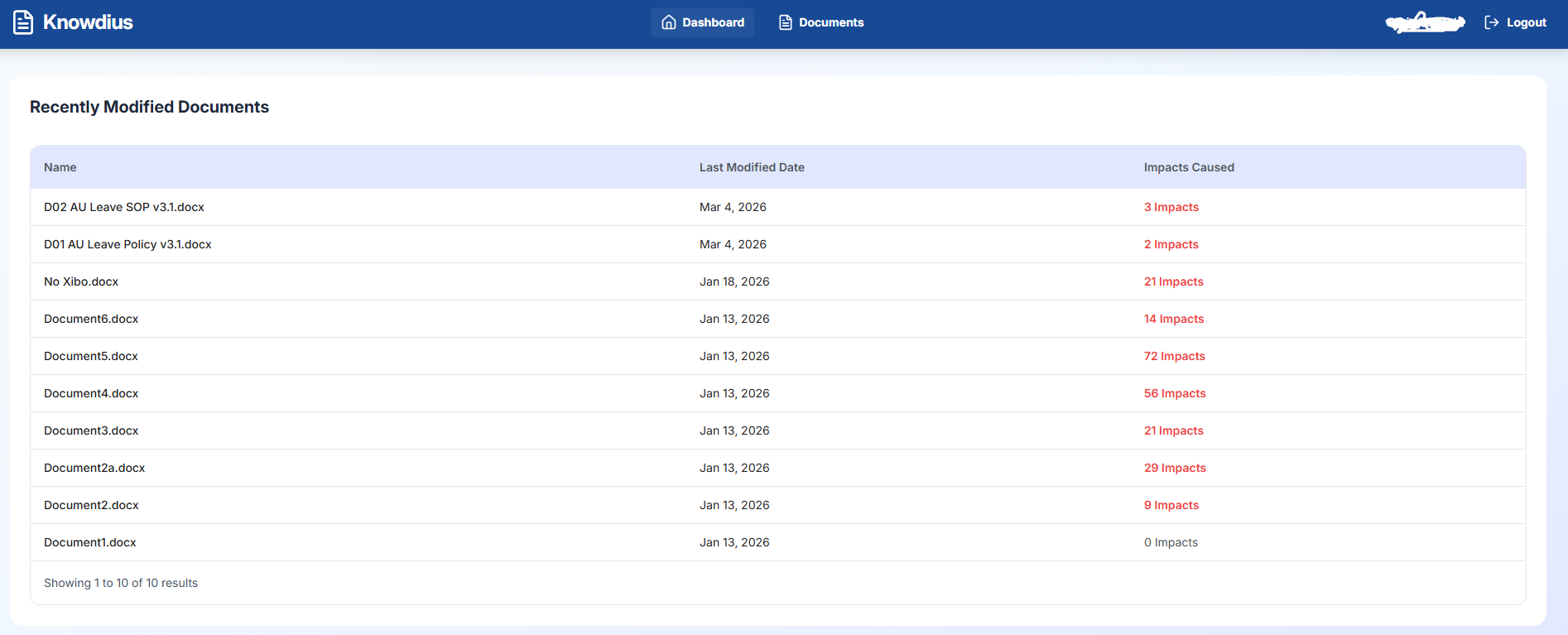
Knowdius is being developed to identify potential contradictions between documents and highlight what may need reviewing when something changes.
How it works
Your knowledgebase stores your policies, procedures, manuals, and training materials. Knowdius works alongside it, analysing the information across those documents to help you identify:
For example, if a leave policy changes from 12 weeks to 16 weeks, Knowdius is designed to flag related onboarding guides, payroll procedures, or staff handbooks that still refer to 12 weeks.
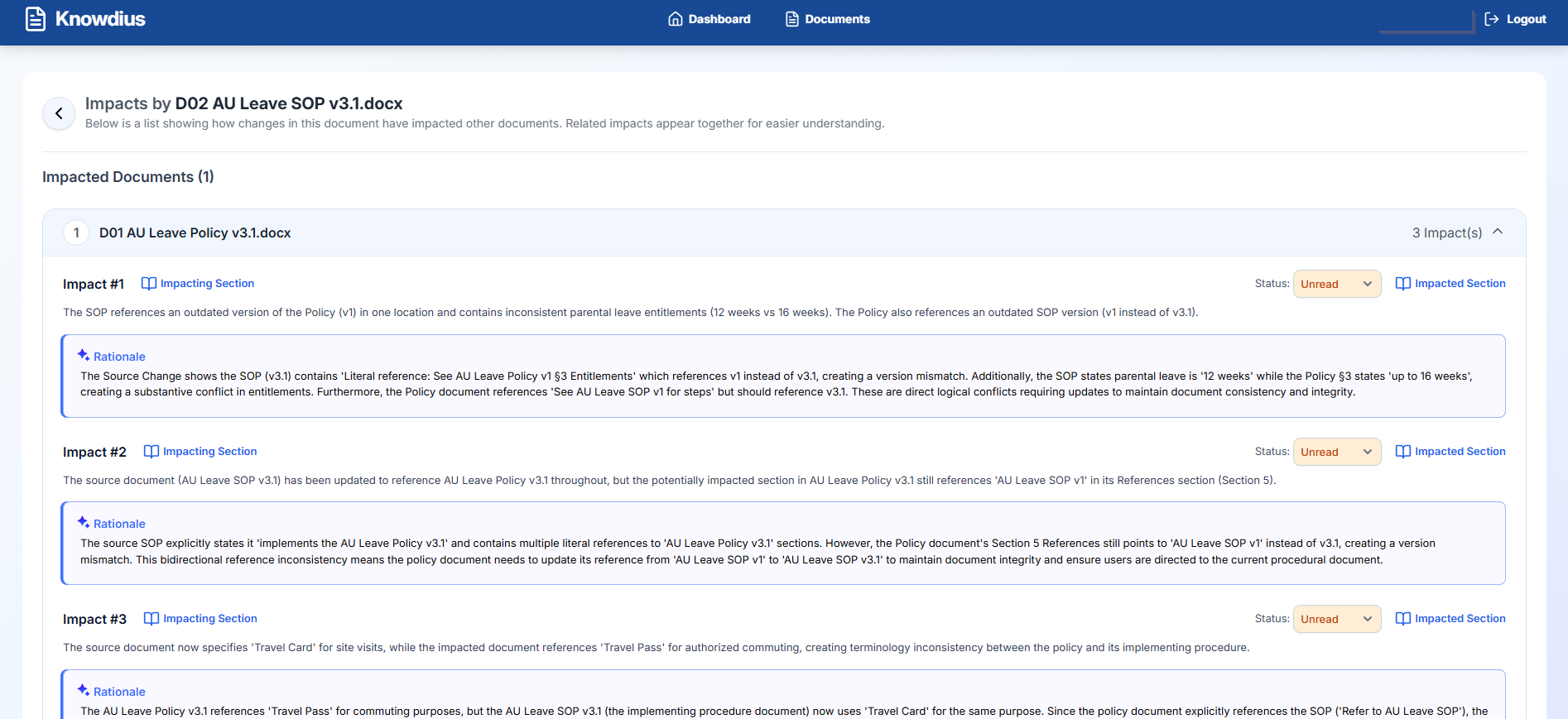
It highlights the potential inconsistency and explains why the documents may be affected. You then review the information, verify what is correct, and update the relevant documents.

Your knowledgebase stores the documents. Knowdius helps you keep their contents consistent.
Knowdius is not a knowledgebase or document repository. It helps you see connections and potential conflicts across the documents you already maintain.
Currently an early-stage concept, Knowdius is exploring how documentation impact analysis can help organisations catch inconsistencies before they lead to operational confusion, compliance risks, or audit findings.
Even though policies, procedures, and training materials are interconnected.
During audits, incidents, accreditation reviews, or operational confusion.
Uncertainty about whether every affected document was actually reviewed.
In any environment where policies, procedures, operational guidance or other documentation must stay aligned over time.
Examples include:
This review goes beyond simple keyword matching, assessing wording in context to identify related instructions or requirements that may no longer align.
Each surfaced item links the affected sections across documents, making interdependencies visible and easier to assess.
This is a structured, point-in-time review intended to support professional judgement – not replace it.
Each surfaced item includes an explanation of why it was flagged, along with references to the affected documents and sections.
The rationale is visible and reviewable – enabling teams to assess relevance rather than relying on opaque automation.
The goal is not automatic correction, but earlier visibility supported by traceable reasoning, allowing teams to review and decide how to respond.
Knowdius is designed for those responsible for maintaining documentation integrity and governance, including but not limited to:
Knowdius is not designed to replace auditors, compliance professionals, or subject matter experts.
Judgement, interpretation, and decision-making remain human responsibilities.
This proof of concept explores whether potential inconsistencies can be surfaced earlier – reducing investigative effort while preserving professional oversight.
Knowdius is currently in proof-of-concept stage and is being shared for validation and feedback. If the challenge of documentation drift or hidden inconsistencies feels familiar, we would value a short discussion to better understand your perspective. Fill in the form below or email us at hello@knowdius.com